
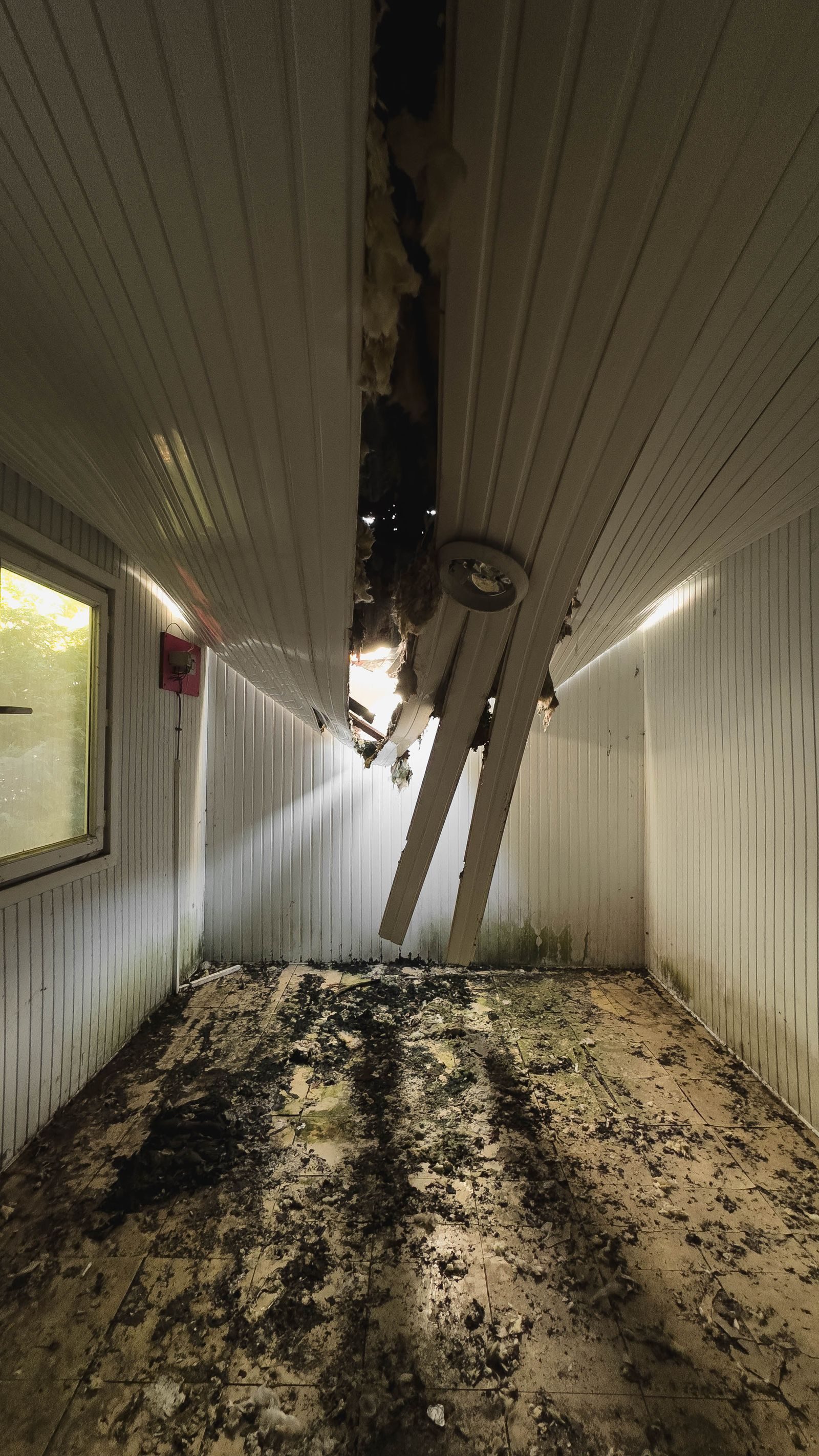
Storm damage restoration in Clarksville, TN covers what happens after severe weather hits a home: rain coming through a damaged roof, a tree through a wall or ceiling, water pushed into a basement or crawl space, and wet insulation and drywall that stay damp for weeks if nobody deals with them. Middle Tennessee gets severe thunderstorms, damaging wind, hail, tornado warnings and winter ice, and the damage often arrives as a mix of structural, water and mold problems at once. Call (931) 208-8559 with your ZIP code and a description of what the storm did, and the call is connected to an independent local service provider who can talk through the next steps.
First steps after a storm
- Make sure everyone is safe. Stay away from downed power lines and anything they touch, and treat every line as live.
- If water is near outlets, the electrical panel or appliances, stay out and have the power shut off by someone who can do it safely.
- Stop the water if you can. Shut off the main if a pipe was hit, and set buckets under roof leaks.
- Photograph and video the roof, ceilings, walls, floors and contents before anything is moved. Take wide shots that show the whole room, then close ups of the damage.
- Cover openings if it is safe to do so, and keep receipts for anything you buy for emergency protection.
- Call your insurer, and call (931) 208-8559 to talk through water removal and drying.
Roof leaks, broken windows and fallen trees
Wind can lift shingles, hail can bruise them and a limb can open a hole large enough to flood an attic or ceiling in one storm. Water follows framing, so a leak at the roof edge can show up as a stain several feet away, or as a bulging ceiling that is holding water. Do not stand under a ceiling that is sagging. If a tree or limb is on the house, do not climb on it, since it may be holding up part of the structure or resting on a power line. Water that came through the roof is clean at first, but insulation and drywall soak it up and need to be checked. See storm and roof leak water damage in Clarksville for what to expect in the wet rooms, and ceiling leak water damage when a ceiling is stained or sagging.
Water from the ground up
Heavy rain does not always come through the roof. It can push through foundation walls and floor drains, fill window wells and collect in crawl spaces. Clarksville sits where the Red River meets the Cumberland, and creeks and low ground around town can take on a lot of water in a short time. Surface water that comes in from outside is treated as contaminated, so wet carpet, pad and lower drywall are usually removed rather than dried in place. See flooded basement cleanup in Clarksville, crawl space water damage and emergency flood cleanup. If a sewer or drain backed up during the storm, see sewage cleanup in Clarksville.
What storm damage restoration usually involves
Every storm loss is different, so the scope depends on what you see. Common parts of the work include:
- Removing standing water and wet contents. See emergency water removal and extraction.
- Pulling wet insulation, ceiling material or drywall that cannot dry in place.
- Drying the structure with air movers and dehumidifiers, with moisture readings. See water mitigation and structural drying.
- Temporary protection, such as tarps or boards, while permanent repairs are arranged.
- Cleaning and, when materials stayed wet, mold remediation.
- Photos, readings and notes for your insurer.
A roofer, tree service, electrician or general contractor may be needed as well. Ask the provider you speak with which parts they handle and which need another trade.
Storm damage and insurance
Policies treat wind, hail, falling trees and flooding differently. Wind damage, falling trees and the rain that follows an opening in the roof are often covered under a standard homeowners policy, while rising surface water usually needs a separate flood policy. Deductibles can differ by cause. Call your insurer early, keep dated photos and receipts for emergency steps, and do not throw out damaged items until you have documented them or the adjuster has seen them. See water damage insurance claim help. Check your own policy and ask your insurer, since coverage varies.
Storm damage around Clarksville
Older homes near downtown and New Providence have mature trees close to roofs and often have crawl spaces that collect water after heavy rain. Newer subdivisions around Sango and along Tiny Town Road and Trenton Road tend to have larger open rooms where a ceiling leak can soak a lot of carpet. Homes on septic in Woodlawn, Cunningham and Adams can see drain fields saturate in a long rain. Calls are also taken for Fort Campbell, Oak Grove and Palmyra, so give your ZIP code and the area you are in when you call. If you live in on-post housing at Fort Campbell, report damage to the housing maintenance office first.
How the call works
This site is a phone line, not a contractor. When you call (931) 208-8559, the call is connected to an independent local service provider when one covers your area. Availability after a widespread storm depends on the providers covering your area at the time you call, so ask directly who can respond. Agree on the scope and the cost with the provider and get it in writing before work starts.
Related help
- Storm and roof leak water damage in Clarksville
- Emergency water removal and extraction
- Burst and frozen pipe cleanup
- Water mitigation and structural drying
- Mold inspection and testing in Clarksville
Areas nearby: Oak Grove, KY, Palmyra and Dover. Back to [water damage restoration in Clarksville, TN](/).
Fire and other losses
A storm can also start a fire, for example from a lightning strike or a downed line. See fire damage restoration in Clarksville, and see restoration services in Clarksville for a guide to every kind of cleanup on this site.
How it works
- 1
Stay safe
Keep away from downed lines, sagging ceilings and water near outlets.
- 2
Call (931) 208-8559
Share your ZIP code, what the storm damaged and which rooms are wet.
- 3
Remove and dry
Standing water and wet materials come out, then drying equipment is set.
- 4
Document
Photos, readings and receipts are kept for your insurer.